
Japanese Katsu Bowls with Tonkatsu Sauce: 7 Best Secrets for an Ultimate Crispy Experience
Japanese Katsu Bowls with Tonkatsu Sauce are more than just a meal; they are a textural masterpiece that transports you straight to a bustling Tokyo kitchen. Welcome to HelthRecipe, where we believe that creating five-star vibes in your slippers is the ultimate form of accessible luxury.
I’m Chef Niwala, and I still remember the first time I heard the sizzle of a pork cutlet hitting hot oil in my grandmother’s kitchen—it was a rhythm that changed my life. Real talk: making Japanese Katsu Bowls with Tonkatsu Sauce might seem intimidating, but with a few simple tricks, you can turn your average Tuesday into a flavorful journey.

When you commit to making authentic Japanese Katsu Bowls with Tonkatsu Sauce, you are signing up for a symphony of crunch and savory depth that store-bought versions just can’t match. It’s about respecting the ingredients and finding joy in the process, even if things get a little messy. In this guide, I’m sharing my grandmother-approved secrets to help you master Japanese Katsu Bowls with Tonkatsu Sauce without the stress.
Why is the secret to a perfect Japanese Katsu Bowl all in the breading?
The Magic of Panko Breadcrumbs
If you want your Japanese Katsu Bowls with Tonkatsu Sauce to have that signature airy crunch, you must use high-quality Panko breadcrumbs. Unlike standard breadcrumbs, Panko flakes are larger and absorb less oil, creating a lighter, crispier coating that defines true Japanese comfort food. Whenever I prepare Japanese Katsu Bowls with Tonkatsu Sauce, I gently press the Panko into the meat to ensure every bite is covered in golden goodness.
The Flour Dusting Technique
A crucial step in preparing Japanese Katsu Bowls with Tonkatsu Sauce is the initial dredging in flour, which acts as the glue for the egg wash. Real talk: if you skip this or dust too heavily, the breading will slide right off during frying, leaving you with a naked cutlet. When I teach home cooks to make Japanese Katsu Bowls with Tonkatsu Sauce, I always emphasize shaking off the excess flour to keep the layers distinct and crisp.
The Egg Wash Bond
The bridge between the flour and the Panko in Japanese Katsu Bowls with Tonkatsu Sauce is a smooth, well-beaten egg wash. I like to add a splash of oil or water to the eggs, which helps the coating adhere better and prevents the breadcrumbs from burning too quickly. This simple tweak ensures that your Japanese Katsu Bowls with Tonkatsu Sauce come out looking like edible masterpieces every single time.
How can you achieve that signature golden-brown crunch without overcooking the meat?
Mastering Oil Temperature
The difference between a greasy mess and the perfect Japanese Katsu Bowls with Tonkatsu Sauce lies entirely in managing your oil temperature, ideally around 340°F (170°C). If the oil is too cool, the breadcrumbs soak up grease; too hot, and the outside burns before the inside is cooked. For the best Japanese Katsu Bowls with Tonkatsu Sauce, use a thermometer or the chopstick test—if bubbles gently fizz around the wood, you are ready to fry.
The Sound of Frying
My grandmother taught me that Japanese Katsu Bowls with Tonkatsu Sauce speak to you while they cook; the sound changes from a loud, aggressive sizzle to a deeper, hollow crunch as the moisture evaporates. Listening to your food is a huge part of the process, ensuring you pull the cutlet at the exact moment of perfection. This sensory attention is what elevates homemade Japanese Katsu Bowls with Tonkatsu Sauce above standard takeout.
Resting is Non-Negotiable
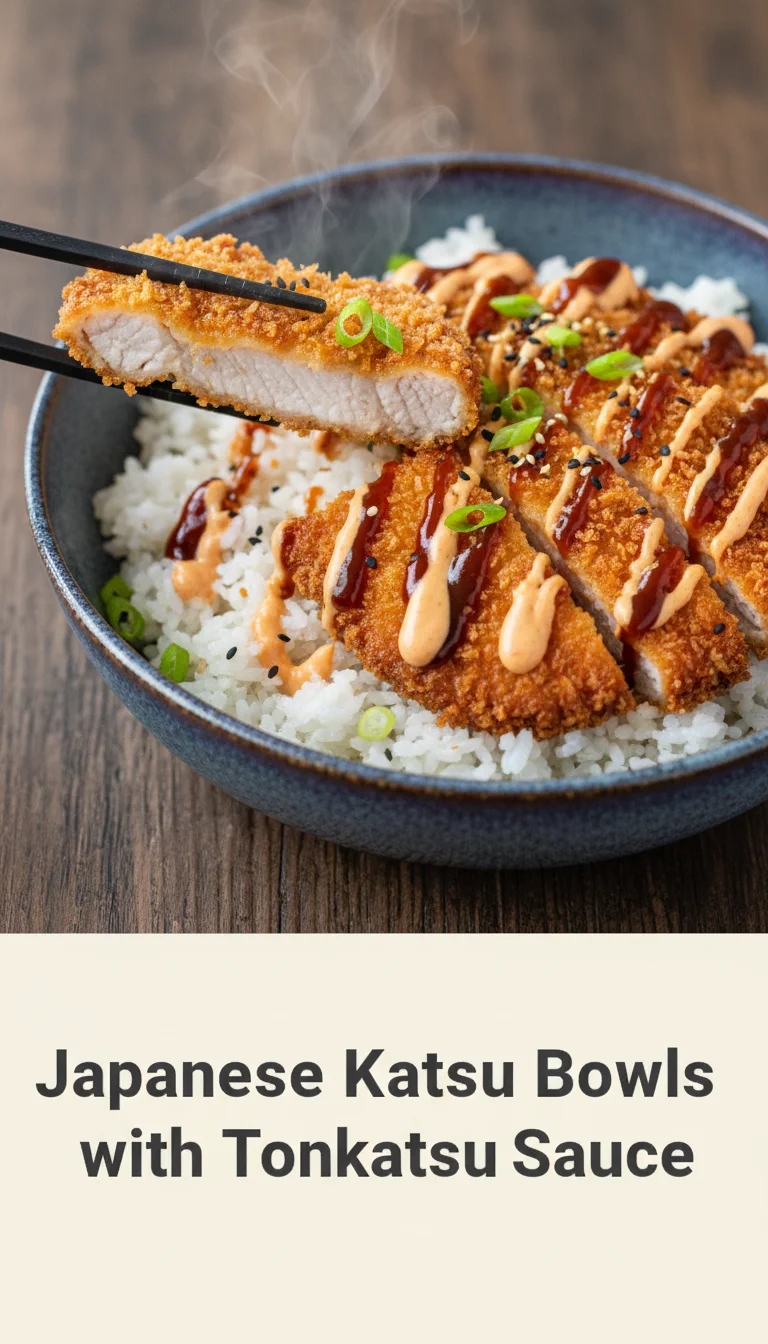
Once you lift your cutlet from the oil, resisting the urge to slice it immediately is the hardest part of making Japanese Katsu Bowls with Tonkatsu Sauce. Resting the meat on a wire rack for a few minutes allows the residual heat to finish cooking the pork while keeping the juices locked inside. If you slice too soon, the steam escapes and softens the crust, ruining the texture of your Japanese Katsu Bowls with Tonkatsu Sauce.
“Cooking is a conversation with your ingredients. Listen to the sizzle, and it will tell you when it’s ready.” — Chef Niwala
What makes an authentic Tonkatsu Sauce taste so much better than store-bought versions?
The Umami Balance
While you can buy bottles at the store, a homemade sauce for Japanese Katsu Bowls with Tonkatsu Sauce allows you to balance the tanginess of Worcestershire with the sweetness of ketchup and oyster sauce. This customization creates a rich, complex flavor profile that perfectly cuts through the richness of the fried pork. My version of Japanese Katsu Bowls with Tonkatsu Sauce always features a sauce that has been tweaked to have just the right amount of kick.
Fresh Grind Sesame Seeds
One secret detail that takes Japanese Katsu Bowls with Tonkatsu Sauce to the next level is grinding fresh sesame seeds into the sauce just before serving. This releases nutty oils that add an incredible aroma and texture, making the dipping experience deeply satisfying. It’s a small step in the Japanese Katsu Bowls with Tonkatsu Sauce process that delivers five-star vibes.
Customizing Sweetness and Spice
Every palate is different, which is why making your own sauce for Japanese Katsu Bowls with Tonkatsu Sauce is a game-changer. You can add a dash of hot mustard for heat or a little honey to mellow it out, tailoring the dish to your family’s preference. This flexibility is why I love sharing recipes like Japanese Katsu Bowls with Tonkatsu Sauce—they adapt to you.
Which specific cuts of pork deliver the most succulent and tender katsu results?
Loin vs. Tenderloin
When shopping for Japanese Katsu Bowls with Tonkatsu Sauce, you usually choose between Rosu (loin) which has a tasty fat cap, or Hire (tenderloin) which is leaner and softer. I personally prefer the loin for its rich flavor, but the tenderloin is incredibly tender and melts in your mouth. Both cuts work beautifully for Japanese Katsu Bowls with Tonkatsu Sauce, so pick the one that fits your mood.
The Art of Pounding
Regardless of the cut, pounding the meat is essential for uniform cooking in Japanese Katsu Bowls with Tonkatsu Sauce. This breaks down tough muscle fibers and ensures the cutlet is an even thickness, preventing dry edges and raw centers. It’s also a great stress reliever before you sit down to enjoy your Japanese Katsu Bowls with Tonkatsu Sauce!
Rendering the Fat Cap
If you choose the loin for your Japanese Katsu Bowls with Tonkatsu Sauce, make sure to make small slits in the connective tissue between the meat and the fat. This prevents the cutlet from curling up in the hot oil, ensuring it stays flat and cooks evenly. A flat cutlet is crucial for the beautiful presentation of Japanese Katsu Bowls with Tonkatsu Sauce.
How do you assemble the ultimate katsu bowl to balance rich flavors with fresh textures?
The Rice Foundation
The base of any great Japanese Katsu Bowls with Tonkatsu Sauce is fluffy, short-grain Japanese rice that is slightly sticky. It soaks up just enough sauce and meat juices without becoming mushy, providing a comforting, neutral backdrop for the bold flavors. If you love rice bowls, you might also enjoy our Korean Ground Beef Bowl for a similar comforting experience, but nothing beats the crunch of Japanese Katsu Bowls with Tonkatsu Sauce.
The Cabbage Mountain
A massive pile of finely shredded cabbage is mandatory when serving Japanese Katsu Bowls with Tonkatsu Sauce because it acts as a palate cleanser. The cool, crisp texture of the cabbage cuts through the richness of the fried pork, making the dish feel lighter and more balanced. For a different take on fresh sides, check out our Asian Cucumber Salad which pairs well, but traditional cabbage is king for Japanese Katsu Bowls with Tonkatsu Sauce.
Plating for Visuals
We eat with our eyes first, so arrange your Japanese Katsu Bowls with Tonkatsu Sauce by placing the sliced pork proudly on top of the rice and cabbage. Drizzle the sauce artistically or serve it on the side to maintain that crucial crispiness until the very last bite. If you are looking for more crispy textures, our Crispy Chicken Wonton Tacos are fun, but the elegance of Japanese Katsu Bowls with Tonkatsu Sauce is timeless.
Key Takeaways
- Bread with Care: Use Panko and press it in firmly to ensure your Japanese Katsu Bowls with Tonkatsu Sauce stay crispy.
- Watch the Heat: Maintain oil at 340°F to prevent greasy or burnt Japanese Katsu Bowls with Tonkatsu Sauce.
- Sauce Matters: Homemade sauce with ground sesame elevates Japanese Katsu Bowls with Tonkatsu Sauce beyond restaurant quality.
- Rest the Meat: Let the pork rest to keep your Japanese Katsu Bowls with Tonkatsu Sauce juicy and tender.
Making Japanese Katsu Bowls with Tonkatsu Sauce is a labor of love that rewards you with incredible flavor and texture. It pairs wonderfully with other dishes like Cantonese Chow Mein for a feast, or a simple Asian Cucumber Salad TikTok Recipe for a quick lunch. Whether you are a fan of Chinese BBQ beef or Asian Ground Beef Noodles, adding this katsu recipe to your rotation is a must.
Don’t forget to try our Spicy Salmon Sushi Bake Recipe for another Japanese classic, or visit our original Japanese Katsu Bowls page for more inspiration. For a deeper dive into the history of this dish, check out this guide to Tonkatsu. Enjoy your flavorful journey with Japanese Katsu Bowls with Tonkatsu Sauce!
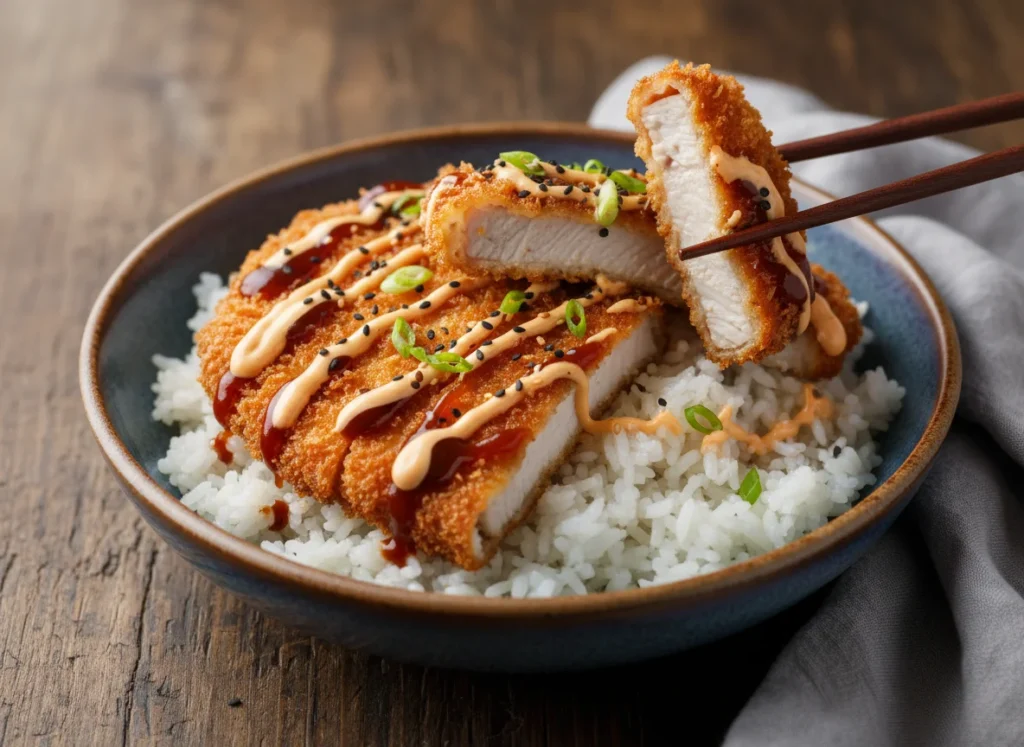
Japanese Katsu Bowls with Tonkatsu Sauce
Ingredients
Method
- If using pork loin, make small slits in the connective tissue to keep it flat while cooking.
- Pound the pork cutlets to an even thickness for uniform cooking.
- Set up a dredging station with flour, beaten eggs, and Panko breadcrumbs.
- Dust each pork cutlet lightly in flour, shaking off excess.
- Dip the floured cutlet in the egg wash, ensuring it's fully coated.
- Press the Panko breadcrumbs firmly into the cutlet for maximum coverage.
- Heat the vegetable oil in a skillet and fry the cutlets until golden brown and cooked through, about 3-5 minutes per side.
- Serve the fried cutlet on a bed of cooked rice.
- Top it with the finely shredded cabbage and drizzle with Tonkatsu sauce.
- Optionally, grind sesame seeds over the sauce before serving.