Lemon Herb Dressing: 7 Delicious Secret Recipes for the Ultimate Salad Experience
Lemon Herb Dressing is more than just a condiment; it is the heartbeat of a truly memorable salad. Welcome to the kitchen, my friends! If you have been following my culinary journey here at Helth Recipe, you know that I believe even the simplest meal deserves five-star vibes.
Real talk: I used to think salads were boring rabbit food until my grandmother showed me how a vibrant, homemade Lemon Herb Dressing could transform a humble bowl of greens into nourishment for the soul. She was the original kitchen boss, and her philosophy was simple—fresh ingredients, a little patience, and a lot of love.

Whether you are wearing your comfy slippers or hosting a dinner party, mastering a classic Lemon Herb Dressing is an essential skill for any home cook. It is the unsung hero that ties textures and flavors together, creating an experience that lingers on your palate. Today, we are going to dive deep into the art of the vinaigrette, leaving those sad, store-bought bottles behind. Trust me, once you taste the difference a fresh Lemon Herb Dressing makes, you will never go back to the industrial stuff.
Key Takeaways
- Freshness is King: A homemade Lemon Herb Dressing relies on the vibrancy of fresh citrus and herbs, offering a flavor profile that shelf-stable bottles simply cannot match.
- Versatility: This dressing isn’t just for lettuce; it doubles as an incredible marinade for meats and vegetables.
- Balance: Mastering the ratio of acid to oil is the secret to a perfect Lemon Herb Dressing every time.
What makes a homemade lemon herb dressing so much better than store-bought options?
When you crack open a bottle from the supermarket, you are often getting a Lemon Herb Dressing that has been sitting in a warehouse for months, losing its soul. Store-bought options are typically loaded with preservatives, artificial thickeners, and high-fructose corn syrup to keep them “fresh.” Real talk: nothing beats the aroma of lemons squeezed right at your kitchen counter. A homemade Lemon Herb Dressing is alive with enzymes and volatile oils that dance on your tongue, something a factory line can never replicate.
The Vibrancy of Fresh Ingredients
There is a specific magic that happens when raw lemon juice meets high-quality olive oil in a fresh Lemon Herb Dressing. The acidity is bright and sharp, cutting through the richness of the oil in a way that preserved citric acid just can’t. In my village, we picked herbs right before eating, and that explosion of scent is what defines a true Lemon Herb Dressing. You are controlling the quality, ensuring that only the best, nutrient-dense ingredients enter your body.
Avoiding Hidden Nasties
Have you ever read the label on a commercial dressing bottle? It’s a chemistry experiment, not food. By making your own Lemon Herb Dressing, you avoid stabilizers like xanthan gum and excessive sodium that leave you feeling bloated. My grandmother always said, “If you can’t pronounce it, don’t eat it,” and that rule applies perfectly to your Lemon Herb Dressing. You get pure flavor without the chemical aftertaste.
Infinite Customization
The beauty of whipping up a DIY Lemon Herb Dressing is that you are the artist. If you prefer it tangier, add more zest; if you want it smoother, whisk in a dab of mustard. Unlike a static store-bought bottle, a homemade Lemon Herb Dressing evolves with your mood and your pantry. You can even whip up a variation like my 3 Minute Lemon Dijon Vinaigrette when you are short on time but crave that gourmet touch.
Which fresh herbs provide the most explosive flavor profile for your vinaigrette?
Choosing the right greenery is critical because the herbs are the “herb” in your Lemon Herb Dressing. While dried herbs have their place in long-simmering stews, a fresh vinaigrette demands the delicate texture and immediate punch of fresh leaves. The right combination can transport you to the Mediterranean coast with a single bite. Whenever I make a Lemon Herb Dressing, I treat the herbs not as a garnish, but as a main ingredient.
The Power of Soft Herbs
Soft herbs like basil, parsley, cilantro, and dill are the best friends of a light Lemon Herb Dressing. They bruise easily, releasing their essential oils the moment they are chopped. I love using a mix of flat-leaf parsley and basil for a dressing that feels like summer in a bowl. These herbs bring a grassy, sweet freshness that lifts the heavy olive oil in your Lemon Herb Dressing, making the final dish feel airy and sophisticated.
Woody Herbs for Depth
Don’t ignore the woody herbs like rosemary, thyme, and oregano when crafting a robust Lemon Herb Dressing. These herbs are potent, so you need to mince them very finely to avoid an unpleasant texture. They provide an earthy backbone that pairs beautifully with roasted vegetables. A Lemon Herb Dressing infused with fresh thyme reminds me of the rugged hills near my childhood home—wild, aromatic, and deeply grounding.
Mixing and Matching for Complexity
Why settle for one flavor when you can have a symphony? A complex Lemon Herb Dressing often combines a soft herb with a woody one. For instance, pairing mint with oregano creates a dynamic contrast of cool and warm flavors. Experimenting with these combinations turns a standard Lemon Herb Dressing into a culinary journey. You can even add texture by incorporating seeds, similar to the crunch found in a Lemon Poppy Seed dressing style.
How can you achieve the perfect balance of acidity and richness in every batch?
Achieving the perfect emulsion is what separates a greasy mess from a velvety Lemon Herb Dressing. It is all about the ratio. Too much acid, and your lips will pucker unpleasantly; too much oil, and the greens will feel heavy and sodden. Creating a balanced Lemon Herb Dressing is a ritual that requires tasting as you go—a lesson I learned the hard way after ruining a few salads in my early days as a chef.
Mastering the Golden Ratio
The classic culinary ratio for a vinaigrette is 3 parts oil to 1 part acid, but for a zesty Lemon Herb Dressing, I often tweak this to 2:1. I like that extra punch of citrus to wake up the palate. However, the quality of your olive oil matters immensely here. A grassy, peppery extra virgin olive oil provides the necessary body to stand up to the sharp lemon juice in your Lemon Herb Dressing.
The Role of Emulsifiers
To prevent your Lemon Herb Dressing from separating into a sad pool of oil and juice, you need an emulsifier. Mustard, honey, or even a touch of yogurt can act as the glue. If you want a creamier texture without heavy cream, try whisking in a spoonful of yogurt, inspired by my Creamy Lemon Yogurt recipe. This creates a luscious, thick Lemon Herb Dressing that clings lovingly to every leaf.
Sweetness to Counter the Sour
Sometimes, lemons can be aggressively tart. A touch of sweetness is the secret weapon in a well-rounded Lemon Herb Dressing. A teaspoon of honey or maple syrup doesn’t make the dressing a dessert; it simply rounds off the sharp edges of the acid. This balance of sweet and sour is crucial, much like the flavor profile in Sweet and Sour Honey Lemon Paneer, ensuring your Lemon Herb Dressing is harmonious and addictive.
“A salad without a proper dressing is just a bowl of leaves. A salad with the perfect Lemon Herb Dressing is a story waiting to be told.” — Chef Niwala
Why is this dressing the ultimate secret weapon for marinating meats and vegetables?
Here is a little secret from the professional kitchen: your Lemon Herb Dressing is actually a powerful marinade in disguise. The same components that dress a salad—acid, oil, and aromatics—are exactly what you need to tenderize protein and infuse flavor. I often make a double batch of Lemon Herb Dressing so I can use half for the salad and half to marinate chicken or fish for the next day’s meal.
Tenderizing with Citrus Enzymes
The citric acid in a Lemon Herb Dressing works to break down tough muscle fibers in meat, acting as a natural tenderizer. This is particularly effective for chicken breast or flank steak. However, be careful not to marinate delicate seafood for too long in your Lemon Herb Dressing, or the acid will “cook” it (like ceviche) before it hits the pan. It’s a delicate dance of timing and flavor.
Infusing Flavor Deep into Proteins
Oil is a carrier of flavor. In a Lemon Herb Dressing, the olive oil carries the garlic and herb notes deep into the pores of the meat or vegetables. When you throw that marinated food onto a hot skillet, the sugars in the dressing caramelize, creating a beautiful crust. You can see this technique in action with my Lemon Garlic Skillet Chicken, where the principles of a good Lemon Herb Dressing create a juicy, flavorful main course.
From Salad Bowl to Skillet
Vegetables also benefit immensely from a soak in Lemon Herb Dressing before roasting. Toss your broccoli, asparagus, or potatoes in the dressing before they hit the oven. The herbs roast and become crispy, while the lemon concentrates into a sweet, tangy glaze. Using Lemon Herb Dressing this way guarantees that your side dishes are never boring and always packed with those five-star vibes we love.
What are the best creative ways to customize your lemon herb dressing for different cuisines?
One of the reasons I adore Lemon Herb Dressing is its chameleon-like ability to adapt to any cuisine. With just a few simple swaps, you can take your dressing from the coast of Italy to the streets of Beirut or the markets of Mexico. The base of lemon and oil is a blank canvas, and your spice rack is the palette. A customized Lemon Herb Dressing keeps your meals exciting and prevents palate fatigue.
Mediterranean Magic
To lean into the Mediterranean roots of a Lemon Herb Dressing, focus on oregano, garlic, and perhaps some crumbled feta cheese. I also love adding a splash of red wine vinegar alongside the lemon for extra complexity. This version of Lemon Herb Dressing pairs perfectly with cucumbers, tomatoes, and olives. For an even richer, nuttier profile, you could incorporate sesame paste, similar to a lemon tahini sauce recipe.
Spicy and Zesty Variations
If you like a little heat, why not add some crushed red pepper flakes or a minced jalapeño to your Lemon Herb Dressing? The heat cuts through the richness of the oil and complements the tartness of the lemon beautifully. It reminds me of the bold flavors in a Spicy Chile Lemonade. A spicy Lemon Herb Dressing is fantastic drizzled over grilled corn or a taco salad, adding a kick that wakes up the entire dish.
Creamy and Indulgent Twists
Sometimes you want comfort. You can transform a clear vinaigrette into a creamy Lemon Herb Dressing by blending in an avocado or a handful of soaked cashews. This adds healthy fats and a luxurious texture without dairy. It turns a light side salad into a substantial part of the meal. No matter how you spin it, keeping a jar of fresh dressing base in the fridge allows you to create these variations of Lemon Herb Dressing in seconds.
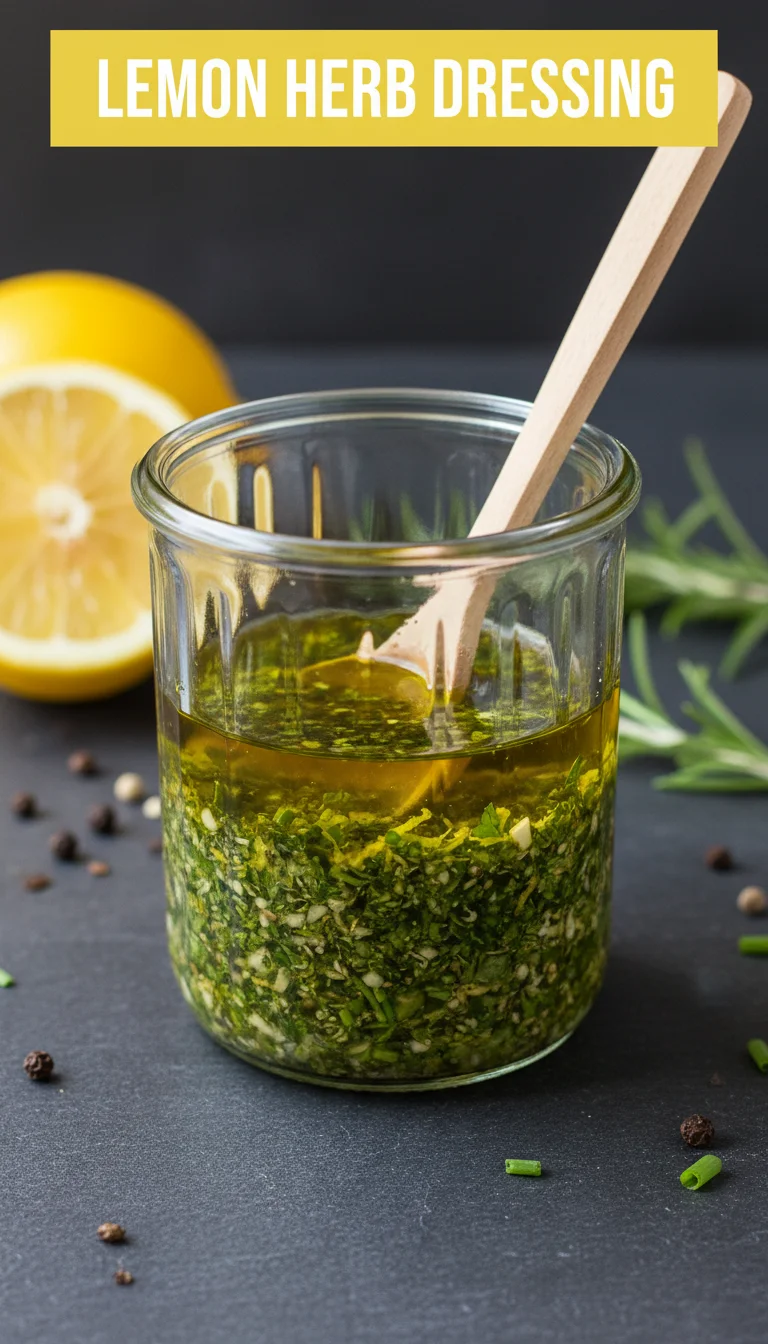
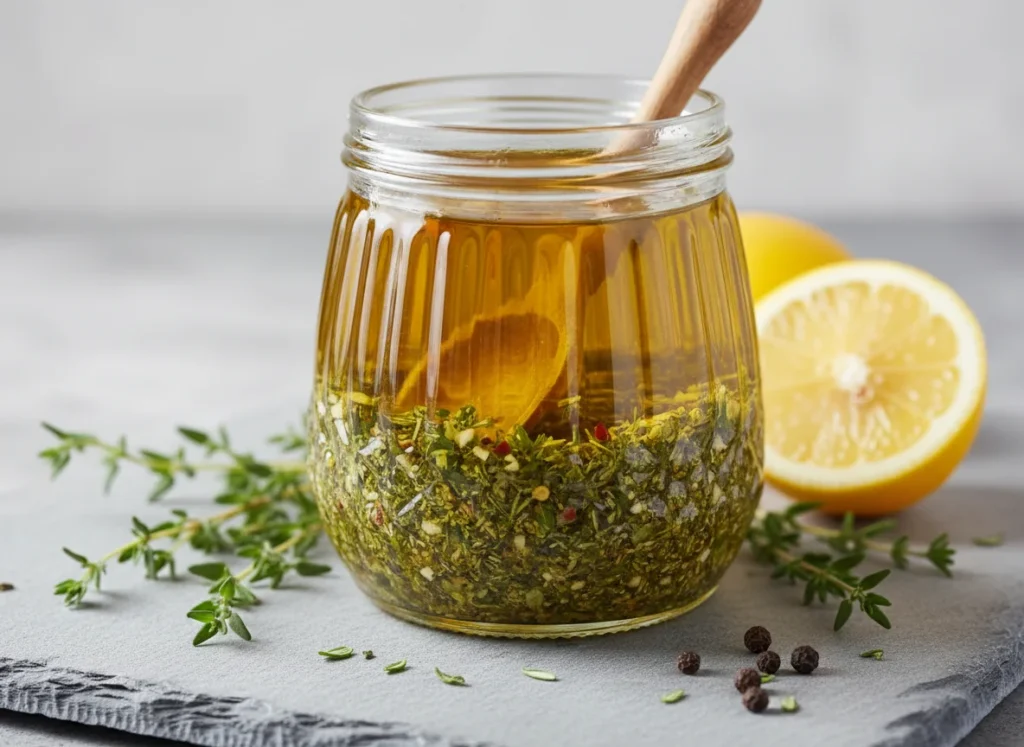
Lemon Herb Dressing
Ingredients
Method
- In a mixing bowl, whisk together the lemon juice, honey or maple syrup, and Dijon mustard.
- Slowly drizzle in the olive oil while whisking to create an emulsion.
- Add the minced garlic, chopped parsley, chopped basil, salt, and pepper.
- Whisk until fully combined and adjust seasonings to taste.